

Dynamics and expression in music; such as phrasing and volume, gives music meaning.
What is phrasing?
All music is constructed in phrases, or musical sentences. It is a good idea to talk about phrasing before we look at dynamics and other expressive techniques because the construction of phrases in a piece of music determines the dynamics (loud and soft and getting louder or softer)
Have a listen to the melody of “Now Thank We All Our God” played by the violin – from our Flipped Strings Series Level 2 books and iBooks.
See how in each phrase, the volume increases and rise to the climax of the phrase and then becomes softer towards the end of the phrase.
Now, listen to the whole string orchestra playing Now Thank We All Our God and listen to how the whole orchestra follows the same phrase.
Activity 1 – Phrasing
Here is a very simple nursery rhyme “Twinkle Twinkle Little Star” Listen to it being played on violin – first of all without phrasing.

Now………. listen to it being played with the phrasing added – you can hear where the phrasing or musical ‘sentences’ occur by the louds and softs being played on the violin and also by the slight pauses or ‘breaths’ at the end of each musical sentence or phrase.
Teachers – you can download the music below without dynamics or phrasing to use as a class activity. Students mark the phrasing with a curved line above or below the music to show the musical sentences or phrases. The first 2 phrases are marked. (Suggested age – grades 2 – 6 elementary school)
Activity 2 – Phrasing
Listen to the Schumann Chorale – arranged for our level 2 Flipped Strings Series Books and iBooks.
Teachers – download the music below for violin melody for the Schumann Chorale. Students can listen to and read the above score and mark the phrasing. (Suggested ages – year 5 elementary school to year 10 high school)
Dynamics – loud and soft
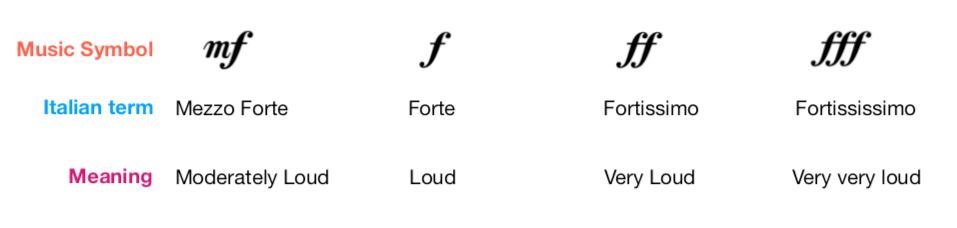
If we note the phrasing or ‘musical sentences’ in a piece of music, then we feel where the music should feel loud or soft or where we might become louder or softer to ‘build’ the phrase. The combination of phrasing and louds and softs gives much more meaning and emotion to music when we listen to it and when we perform it.
Dynamic Symbols – Soft to Loud

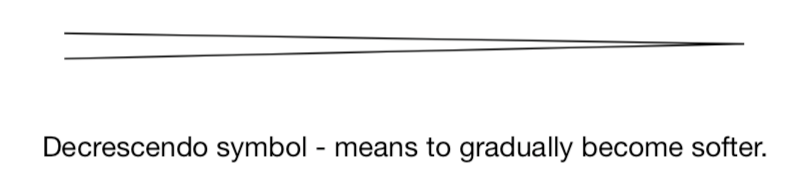
Crescendo and Decrescendo

Themes from the Moldau – an example of the use of dynamics to paint a musical “picture”
Die Moldau, ‘The Moldau’ is the German name for the Vltava River in modern day Czechoslovakia. Smetana went on a cruise down the river and during his travels encountered many scenes on the river bank; included in this arrangement is the opening theme in 6/8 time to illustrate the flowing river. The contrast from Piano (Soft) to Fortissimo (Very loud) illustrates the contrast from the fast flowing rapids in the river to when the river broadens out to the calmness where the river enters the city of Prague. Listen to this extract and how the dynamics helps the music to show us the contrast in the river.
Other Dynamic Expressions
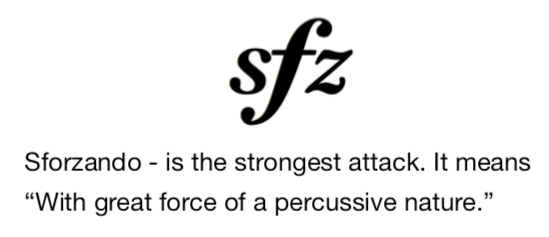

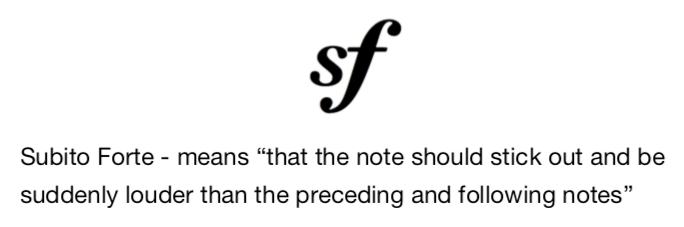
Articulation – making our sound more expressive
Legato & Slurs – making our sound smooth
Legato is an Italian term which means in music to play smoothly and well connected. We can play smoothly on a stringed instrument with separate bows but playing very smoothly and connecting the notes.

Watch the video to see this played on the violin.
We can also play more smoothly by playing more than one note in a bow. This is called a slur and is indicated by a curved line over 2 or more notes of different pitch. Here is D Major scale slurred 2 notes to a bow.

Watch the video to see this played on the violin.
Here is the D Major scale being slurred 4 notes to a bow.

Watch the video to see this played on the violin.
Staccato – making our notes short and detached
Staccato is an Italian term meaning ‘short and detached’. On a stringed instrument such as the violin, we play single bows very short and quick. We mark Staccato notes in music using a dot under or above the note. Here is D Major scale marked with Staccato on every note.

Watch the video to see how the D Major scale is played marked Staccato on the violin.
Combining Legato and Staccato
Composers use a combination of Legato – using slurs to mark phrasing and Staccato to make music more expressive. It is important to learn how to play with different bowing styles on a stringed instrument combined with loud and soft dynamics to make our performance more expressive. Here is an excerpt from the 2/4 section of Themes from the Moldau from our Flipped String Ensemble Pack (available for school string ensembles on our Flipped Music Website) using a combination of Legato slurred bowing and separate staccato bows.
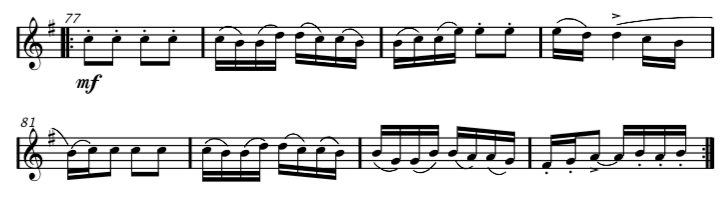
Watch the video to see how this is played on the violin.
 Flipped Music Learning